Collaborator Profile: Claudia Ludwig Design
< Back to InsightsClaudia Ludwig is an interior designer – founder and owner of Claudia Ludwig Design. Based in London and Zurich, Claudia has collaborated with Collective Works on timeless and practical London home renovations. We caught up with her to talk a little more about her work.

“My focus is always the full picture. I start with how the space feels and how it works for a particular client. What doesn’t work and what needs to be improved. My aim is to create homes that people really enjoy living in and that every corner of the house gets used and has a purpose in the end.”
London-Zurich
The Studio was set up in 2020, serving an international clientele between the UK and Switzerland.
I work between London and Zurich. it works quite naturally because a lot of my clients live quite internationally – perhaps they are based in the UK but they have a holiday home in Switzerland or they used to live in the UK and have moved to Switzerland for work. Or the other way around: Swiss clients who have an apartment in London.
Something which is interesting about working on projects in both Switzerland and the UK is that I can introduce my UK clients to Swiss designers which are certainly not well known outside continental Europe and the same for my clients here who are not so aware of UK brands. The way people furnish their home speaks back to their heritage. It makes a connection to home. I find it quite interesting to be that bridge.
Timelessness
Beautiful design is not about decoration for me. It is about proportion, comfort, light, and materiality. A space that feels good to be in, that supports the way you live, and that still looks right in ten years. That is where timelessness comes in.
I’m not so interested in trends. I think of a home as something that will evolve with its owners rather than be refreshed often to follow fashion. I want spaces to feel timeless and warm, not trend driven. I tend to use natural materials and a quieter palette, because it creates a sense of ease and it holds up over time.
A big problem with our industry is the idea that things need to be ripped out and refreshed every five years. If we can avoid that destruction by designing in a way that endures and is still good in 10, 15, 20 years’ time I think you make a major contribution.
There has been a tendency here in Switzerland to think it would be easier to “just flatten everything and start again.” But I very much feel that often you can work with the architecture you have and if necessary, add an extension to introduce light and more space so that it works for modern day living.
I also care deeply about materials. I love the nuance of natural finishes, timber, stone, plaster, linen, wool. They bring warmth and depth, and they age with character rather than looking tired. Combined with good light and a practical plan, they create spaces that feel grounded.
Improving the everyday
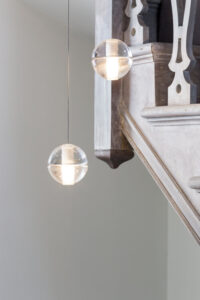
My focus is always on the full picture. How the space works, how it feels, what the light does at different times of day, and how the materials look as they age. I handle everything from early concept and layout planning through to the details, joinery, lighting, furniture, and on site delivery.
I start with the practical reality of how someone lives. What needs to work better, what feels missing, where the friction is. From there I move quickly into layout and flow, because if the plan is right everything else becomes easier.
My aim is to help create a home that really works for everybody. So the everyday experience of the space is improved – whether that means making a nice bedroom for everyone; or creating a place to retreat to, like a roof terrace oasis or a little garden; or creating a bright and sociable kitchen for entertaining.
Working together
My studio is small. It’s mainly me, but that’s also by intent because I want to be closely involved in my projects from the beginning all the way through. This also means that there are opportunities to collaborate and extend the team – with specialists and freelancers, depending on the project size and timeline. The biggest benefit of these collaborations, especially when we collaborate early in the project is that the home is designed as one complete idea, rather than architecture first and interiors later.
When we collaborate early, we can resolve things together that make a huge difference to the finished result. For example, window sizes and positions, ceiling lines, and structural decisions affect furniture planning and lighting. Joinery needs to align with architectural proportions. The kitchen layout affects how the whole extension feels. Even simple things like where sockets go become obvious when you are planning the interior properly.
Collaboration also makes the process smoother for clients. Fewer late changes, fewer compromises, and a clearer path from concept to finished home.
I first met Khuzema from Collective Works at a networking event. We immediately connected on values. Their work has a clarity and calmness that I really respond to, and they have a strong respect for natural materials and the landscape around the building. What I also appreciate is that with Collective Works, sustainability is not treated as an add on. It is built into how they think, in a grounded, intelligent way. That aligns with my own views. Long lasting interiors are inherently more sustainable. If you design carefully and choose materials that endure, you won’t constantly be redoing things.
Unusual Mews
Most recently we have worked on a Marylebone mews house together.
It started with “we just need new colours and new furniture”. But when we actually talked about what was not working in the house, it was much more. We kept the exterior walls, but internally the project was a full rebuild.
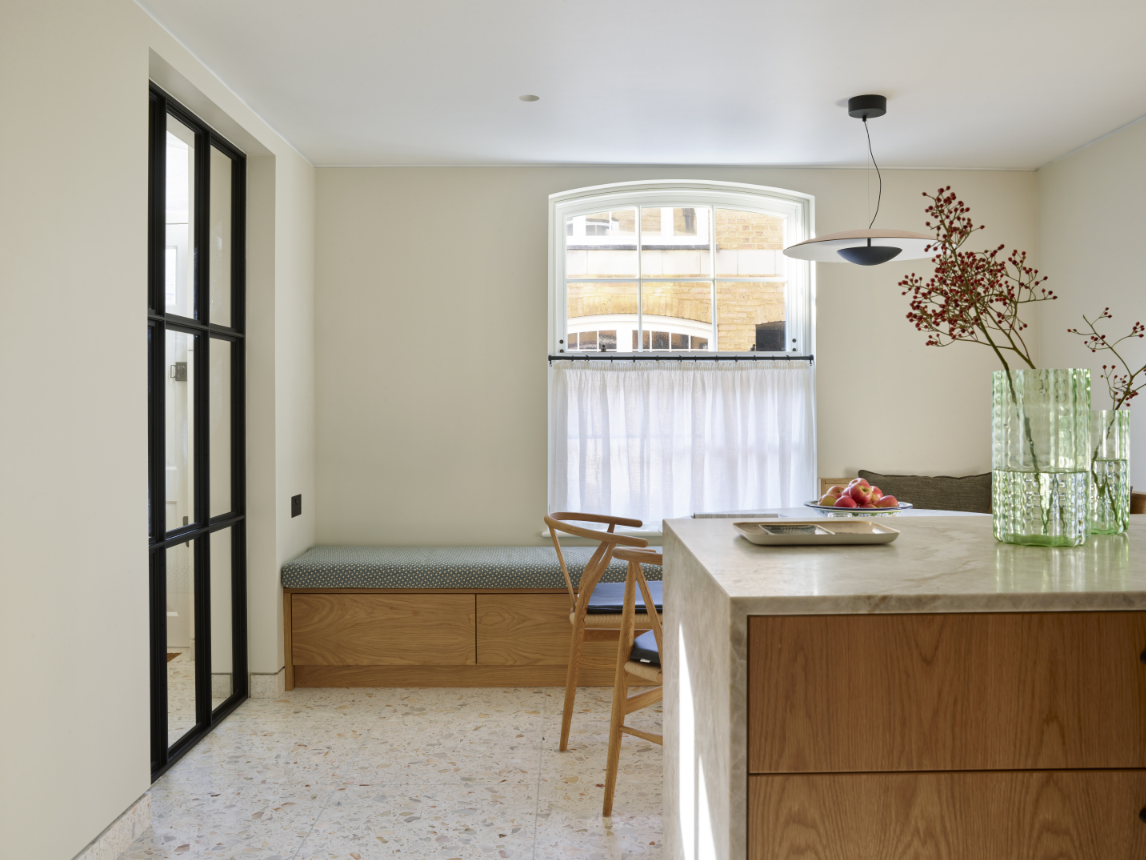
Together we redesigned the layout with new internal openings and full height doorways to improve flow and bring more light through the house. We introduced a glazed partition to the kitchen so it feels connected to the living spaces while still giving separation when needed. We also created an entirely new staircase and added much larger, additional skylights, which completely changed the feeling inside.
Collective Works took on the fabric and I did the interiors, but it was a real collaboration and sharing of ideas. We installed pocket doors everywhere which are full-height because as the mews has very low ceilings, this gives the impression of more space.
The office was at the top of the stairs. It had a raised floor, putting the window at the wrong height, and felt like a cramped and uncomfortable space. We had this idea to make it part of the kid’s bedroom – to make it a generous room where the bed would have its own separate niche. We worked with a joiner to make steps up to the bed and integrate some joinery below it for storage.
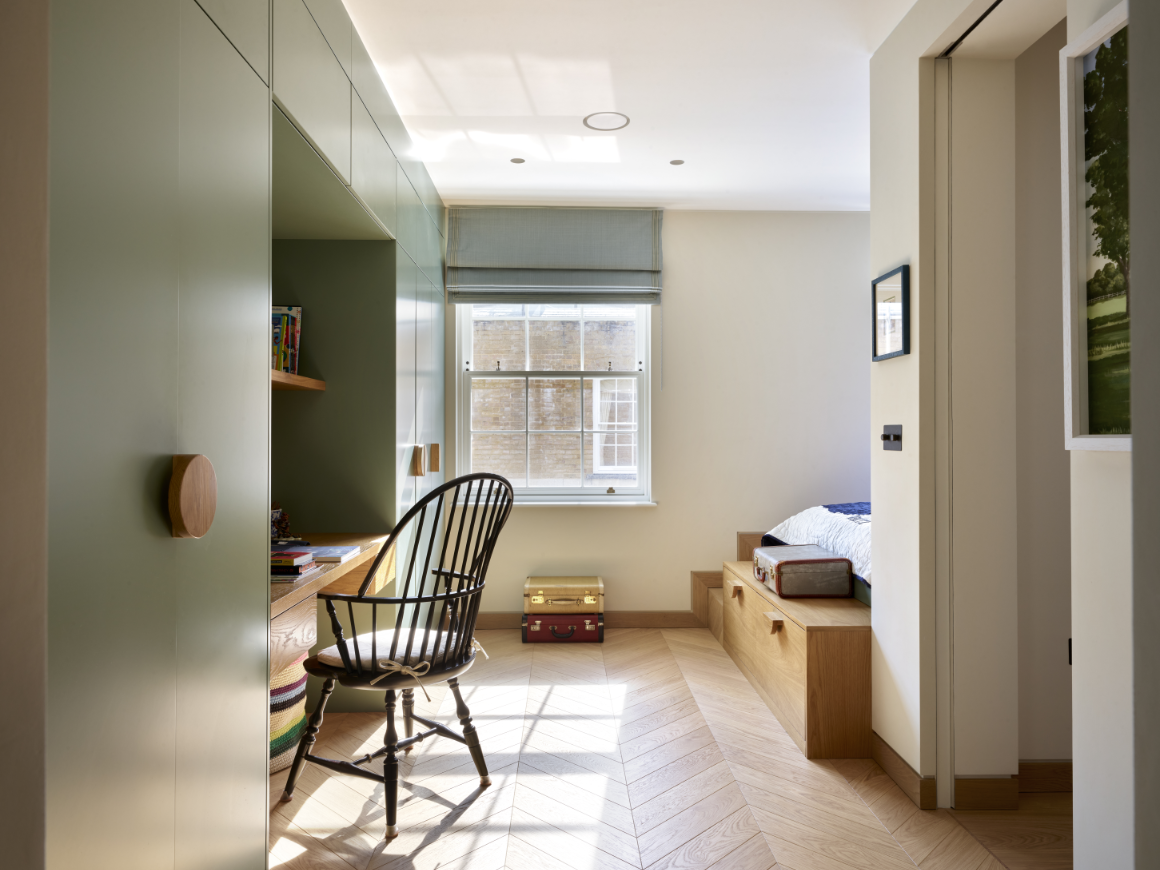
Beyond the layout, we completely upgraded the performance of the house. We installed underfloor heating throughout so there is no need for radiators, we insulated, upgraded electrics, lighting and plumbing as well as replacing the roof. Having Khuzema as part of the team helped to solve the spatial puzzle of how to make the most of the mews house. Collective Works experience of upgrading the performance of the house was key to making it so comfortable. It is a great example of what an architect and interior designer collaboration can achieve. The client tells me regularly how much better it is to live in their house now.
It makes so much sense to do it all at once
When the client is open to looking at the big picture with an architect and an interior designer right at the beginning, then you can discuss all these things and put a working plan in place. It is a shame to just do some nice touching up before realising a couple of years down the line that the heating system needs to be replaced and there are new requirements. Of course, sometimes it’s a question of budget, but I believe that it ends up more cost effective if you can do all the work together.
Period properties
Period properties are one area where I rely quite heavily on the knowledge from architects that I work with. They have a deeper knowledge of listed buildings, conservation areas and the planning constraints, both in the UK and Switzerland. This was especially useful on our first project together – a project for a Victorian Terrace in a conservation area in South Kensington.
Aside from the London properties, I’m currently working on a holiday home in a remote village in the Swiss Alps which quite exciting. It’s a historic, listed building (Denkmalschutz) and will be part of a holiday rental platform a bit like the Landmark Trust in the UK – Ferien in Baudenkmal. The house is from the 1600s and it is quite interesting finding furniture which works with that architecture. I’m seeking out a combination of antique pieces which are from the time but then also a lot of contemporary furniture and finding the bridge there.
It’s a new type of project for me, because it is not only about creating a beautiful home, but also about building an atmosphere and experience that guests will feel the moment they arrive. The setting is extraordinary, and the challenge is to make the interiors feel thoughtful, timeless, and completely in tune with the place.
We’re looking forward to future collaborations with Claudia. You can see more of her beautiful design for special places on Claudia Ludwig Design’s website here.
Photos by Rachael Smith
Let’s have a chat about your vision and
how we can help you realise it.
Collective Works are an architecture & design studio. Our network of professionals will create your perfect solution.