Unlocking Value in Church Estates
< Back to InsightsThe Church of England’s Housing Project is empowering parishes to reimagine their estates, unlocking value. Through a targetted funding stream, they are enabling churches to engage with professionals like architects to create deliverable and futureproofed plans for their buildings and land that are purpose led and support their mission.
A little funding can go a long way
Across the country, communities are searching for creative, sustainable ways to deliver quality, affordable homes. With the government’s target of 1.5 million new homes, every extra home counts – from retrofitting neglected housing to thoughtful infill developments and community-led schemes. At Collective Works, we’ve long believed that small sites, when approached with care and imagination, can unlock value and deliver big social impact. Our recent collaboration with Root & Branch and the GLA on A Guide to Sustainable Homes on Small Sites showed exactly that: how early design thinking can unlock potential where others see constraint and talking to communities from the outset of a project can shape its success.
So, we were delighted to see The Housing Project from the Church of England taking this same spirit and scaling it nationally.

Turning church assets into homes and hubs
The Church of England is one of the largest landowners in the UK, with more than 16,000 buildings across 42 dioceses and 12,500 parishes. That’s an incredible network of land, buildings and communities, much of it rich in potential but in need of reimagining.
The Housing Project is a new initiative designed to help parishes do just that: to creatively use their land and buildings to meet local housing needs while supporting community life and parish sustainability. Backed by a £4.25 million fund over five years, it offers grants of up to £25,000 to help parishes access professional support at the earliest, most crucial stage of their journey: feasibility.
This stage delivers beyond its cost. It’s where opportunities are uncovered, where ideas take shape, and where the conversation starts between parish, community, and professional team. Yet, for many parishes, bringing in architects or consultants can feel out of reach. This fund changes that. It is helping churches explore what’s possible, make realistic plans, and move forward with confidence.
Why early design input matters
Feasibility work is about much more than just drawings. It’s about uncovering hidden value and mapping out a realistic pathway for both people and place.
A feasibility study can help a parish assess what’s on their doorstep, the buildings, the spaces, the stories, and understand how these might be adapted or developed to serve today’s community. That could mean transforming an underused hall into a lively café or co-working hub, decarbonising a draughty church to make it warm and energy-efficient, or exploring whether part of a site could provide homes for local families or supported housing for those in need. It also means starting conversations with neighbours, stakeholders and the wider community to understand how the plans will work in a broader context.
These studies also make it easier to understand funding models. Whether selling or leasing land could unlock resources to reinvest in the churches mission, sustainability or community facilities.
Parishes are already leading inspiring projects. Following a feasibility study, Christ the Redeemer Church in Cambridge has partnered with local charities to provide six modular homes as temporary accommodation for men experiencing homelessness. So far it has supporting 16 people to move into independent housing.
St Martin’s Parish Hall needed significant repairs, and wasn’t managing to cover its running costs. By partnering with a housing association, and selling off a curates house and land for housing, they have built a new chapel and fit-for-purpose community space alongside 14 affordable homes for older people. By working together with the housing association, and keeping the same design team and contractor for the whole site, the project was well coordinated and cost effective.
These examples shows what’s possible when imagination and expertise come together.
Faith, design and social justice
The Housing Project builds on the Coming Home Report, which was a response to the housing crisis and called for homes that are “sustainable, safe, stable, sociable and satisfying.” It’s a vision that resonates with our own mission of building with care. It is grounded in social justice and a deep sense of stewardship. As Isaiah 58:7 puts it: “Is it not to share your food with the hungry and to provide the poor wanderer with shelter?”
This isn’t just about property development. it’s about people, place and purpose. It’s about unlocking value – turning value-rich but aging assets into spaces that nurture community and reflect the Church’s mission of care. The initiative recognises that professional input from architects, planners and community engagement specialists is essential to doing this well.
Forgotten land
An open conversation about challenges, opportunities, needs and resources can turn unloved spaces into projects that have impact far beyond the site line. Our experience of working with the NHS on facilities for social prescribing has shown us that.
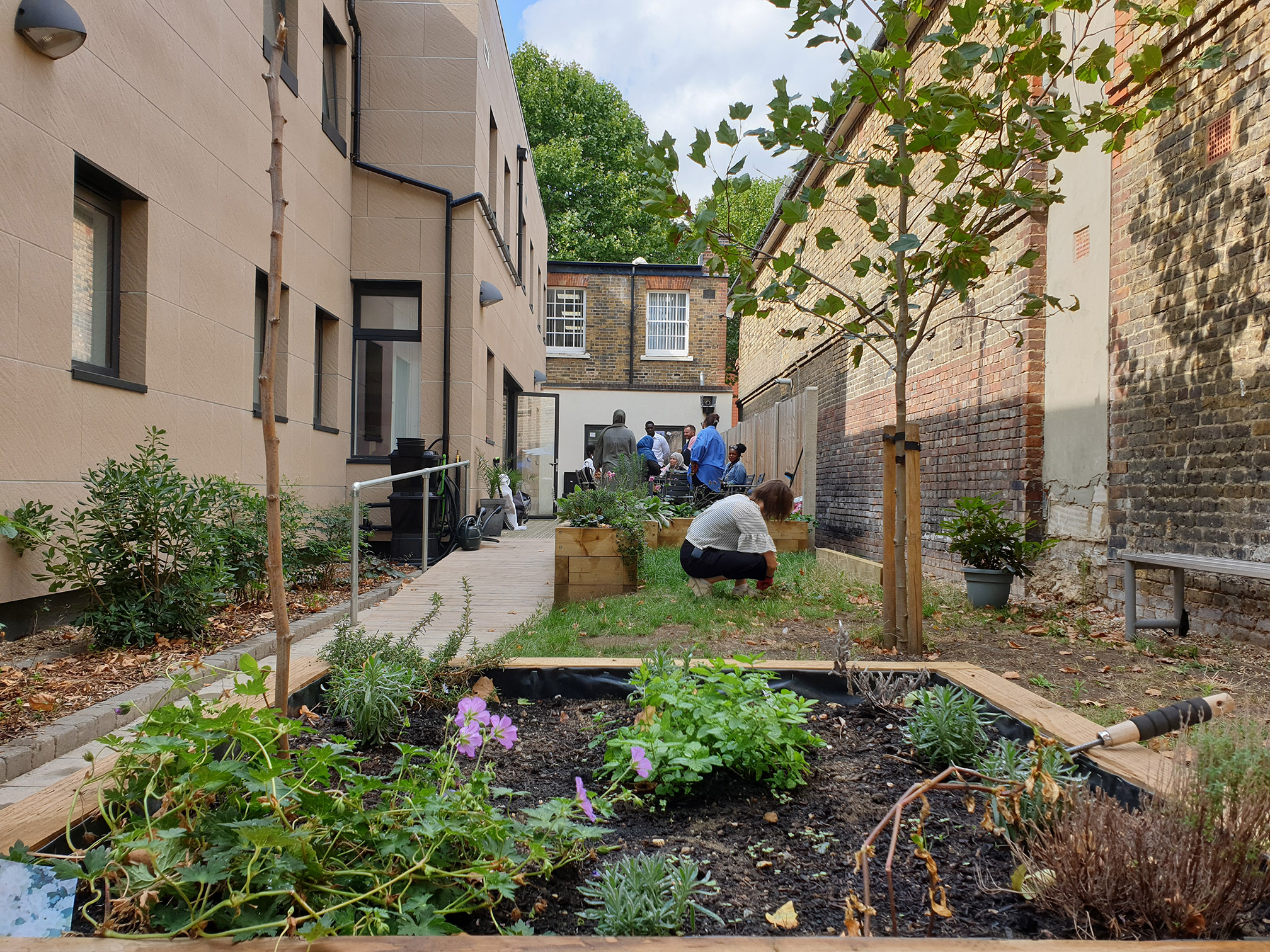
Even at a small scale, having an open brief that can make the most of opportunities can turn into something powerful. The social prescribing garden at Wellington Way Health Cenre identified an unused patch of outdoor space and transformed it into a pleasant space that brings people together to garden, or gives a moment of respite to both staff and patients at the health centre.
A seed that unlocks potential
At Collective Works, we see The Housing Project as a brilliant example of how small amounts of seed funding can unlock enormous social and spatial value. By investing early, and well before any plans are fixed, parishes can work collaboratively with architects to explore their estate’s potential, test ideas, and engage meaningfully with their communities.
The result? Better plans, stronger partnerships, and projects that truly reflect local need.
We’re excited to see how this initiative will empower parishes across the country to build homes and community spaces that embody both faith and good design.
Let’s talk
If you’re part of a parish or diocese exploring how your land or buildings could better serve your community, we’d love to help you Collective Works specialises in early-stage feasibility, community consultation, and creative re-use of existing sites.
Get in touch with our team to start a conversation — and let’s unlock the hidden value within your estate together.
Let’s have a chat about your vision and
how we can help you realise it.
Collective Works are an architecture & design studio. Our network of professionals will create your perfect solution.