Ethics and Collective Action
< Back to InsightsAs part of our engagement with RIBA, and the wider public and profession around ethics, Alasdair has been contributing to and attending the RIBA London Region Ethical Renewal of Practice Forum.
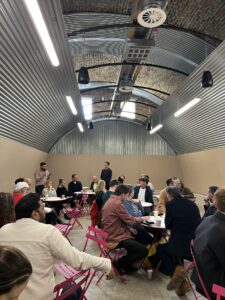
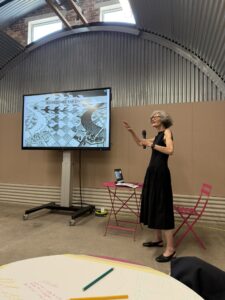
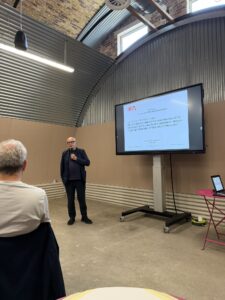
Doug Hodgson, Kathryn Firth & Peter Murray at the Ethical Practice Forum
Led by Doug Hodgson of New Works, this series comprises three events in 2026 tackling “How should we work?”, “How should we collaborate?”, and “How should we innovate?” At Collective Works, we know that change is necessary within our industry, and we support Doug’s belief that participation and collective action are essential to facing today’s challenges and anticipating tomorrow’s.

The underlying theme is ethical practice, which supports the upcoming mandatory competences for UK Chartered RIBA Members. Members will soon need to demonstrate an understanding of the RIBA Code of Conduct, their duties to themselves, to the profession, to those commissioning services, to those in the workplace, to society and the end user, and to the wider world.
The forums themselves have been structured around guest contributions, with almost everyone in the room bringing a provocation to be discussed openly.
Ethics is a subjective topic, and the industry has many challenges, so a huge range of topics were brought to the forum. The relatively fast pace made for two very engaging sessions in April and August this year.
The Provocations
It was great to see contributions grouped according to the six duties framework, one we’ve championed since its inclusion in the 2019 RIBA code, and we found the following provocations particularly pertinent to our work and our view of the wider industry:
- Agnieszka Glowacka, Director & COO, Haptic Architects: “How transparent should Practice be about what they pay and how they calculate salaries? What have you got to hide?”
- Alasdair Ben Dixon, Co-author, RIBA Ethical Practice Guide & Director, Collective Works: “Are we united as an industry, and if so, should we sign up to a joint code of conduct?”
- Dave Lomax, Director, Waugh Thistleton: “How can we all make best use of our expertise, when no-one trusts experts anymore?”
- David Bickle, Director, Hawkins\Brown: “What would a new value model for architectural work look like in an era of regulatory, technological, and climate revolutions — one that reflects not just what we ‘draw’, but what we safeguard, coordinate, regenerate, and contribute?”
- Dieter Kleiner, Director, RCKA Architects: “How can we renew the broken economic development system so that ethical development can thrive?!”
- Dimitris Argyros, Technical Director, Haptic Architects: “Given architecture’s primary goal is to design for people’s well-being and protection (of people and planet), should our Profession be more vocal as a collective body on ethical matters both nationally and internationally?”
- Felicie Krikler, Director, Barr Gazetas: “Are there unintended social consequences of regulations in residential buildings over 18m? And, does compliance with current design and building regulations create good places to live?”
- Jo McCafferty, Director, Levitt Bernstein: “Is our current public procurement system for architectural services ethically defensible and have we allowed it to become an extractive economy within our own sector?”
- Joe Giddings, European Networks Lead, Built by Nature: “How do we transform the economy?”
- Kathryn Firth, Director, FP design / ARUP: “Can we create neighbourhood and district briefs and frameworks that bring together civic pride and the regeneration of the planet?”
- Lucy Smith, Partner, HTA: “How can Architects innovate in Community Engagement and POE, to really listen, learn and take on board what we are told, and thereby helping us evidence to Clients their real and long-term interests?”
- Martyn Evans, Creative Director, Landsec: “Is architecture in crisis?”
- Mike Oades, Director, Atomik Architecture: “Should energy efficiency improvements be given greater weight in the consideration of Listed Building Applications?”
- Miranda MacLaren, Director, Orms: “How can the Profession make a wider and more valued impact with Society and Government, when undertaking Research and Lobbying, so that our voices are heard and valued as highly as other professionals?”
- Pereen d’Avoine, Director, Russian For Fish: “If we are always expected to already know the answer, how do we remain inventive?”
- Rose Hanmer, Associate Architect, Baynes & Mitchell Architects: “When working on a retrofit project, should all existing materials that are high-quality and in good condition be retained?”
- Takero Simazaki, Director, Takero Shimazaki Architects: “Enough Already! I would like to know what everyone thinks about what is ‘enough’? How would we practice if we didn’t focus on ‘growth’ like in the previous decades – both for practice and for developments.”
- Thom Brisco, Director, Brisco Loran: “What part might Practice play in correcting this stark lack of diversity in architectural practice?”
- Zoe Masterton-Smith, Director, Transit Studio: “How can Practice in London give us more and be able to attract and retain people from a diverse background, to be a more inclusive profession, that is more representative of our communities?”
It’s only by surfacing these questions, debating them openly, and then taking action either in your own behaviours and workplace, or by taking feedback directly to a larger institution – that things will improve for our industry and those it serves.
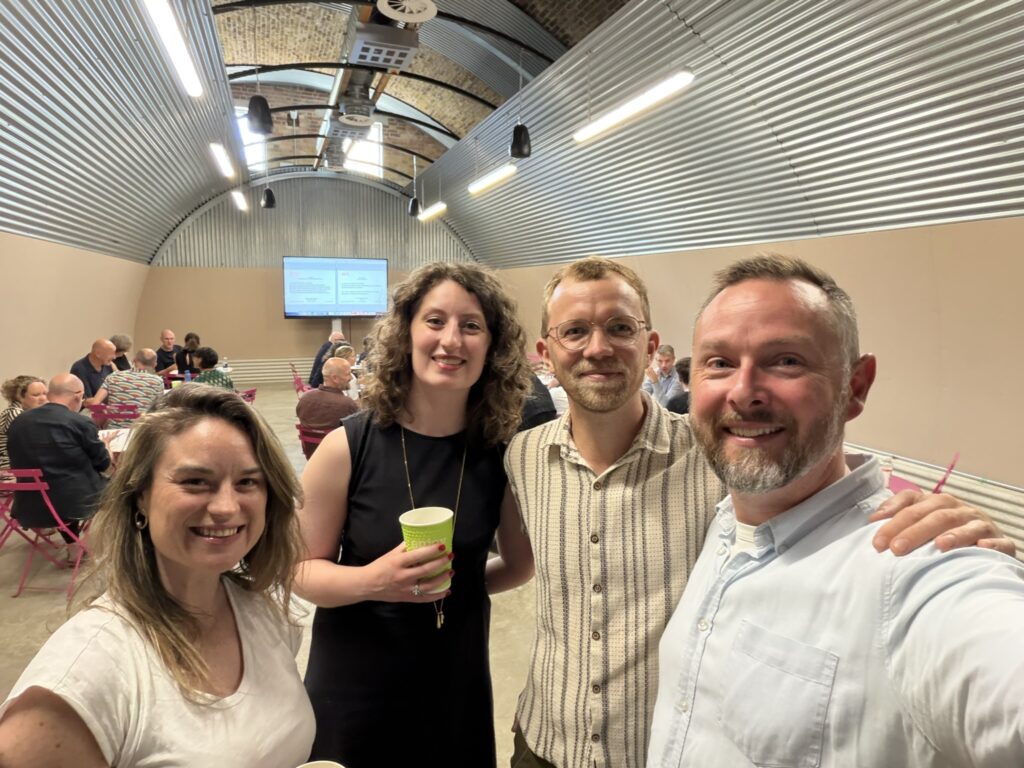
We’d like to thank Doug and RIBA London for all their efforts in championing this topic and hosting these first two events.
We’re also excited to see RIBA London Region teaming up with Architecture Today and Architects Declare to host the last of this year’s events at the Regenerative Design Exhibition at the Building Centre on Wednesday, October 7th.
Alasdair Ben Dixon at the Ethical Practice Forum
Let’s have a chat about your vision and
how we can help you realise it.
Collective Works are an architecture & design studio. Our network of professionals will create your perfect solution.